
Street Karting in Tokyo: How Your Group Can Prepare So No One Who's Nervous About English Gets Left Behind
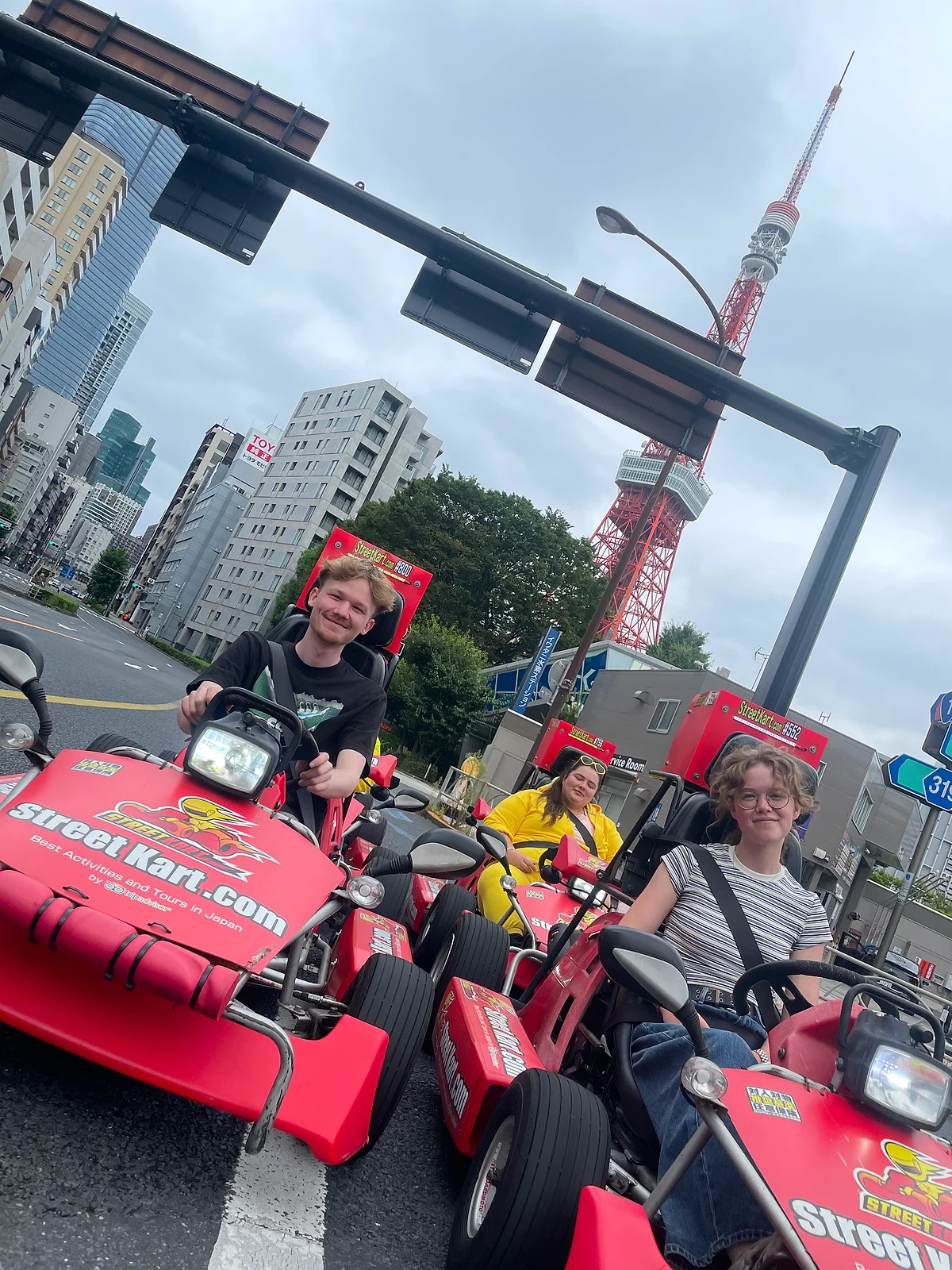
Street Karting in Tokyo: How Your Group Can Prepare So No One Who's Nervous About English Gets Left Behind
Outside a shop in Shibuya, a staff member starts the pre-departure briefing in English. Some people nod along. Some laugh. And right beside them, one person keeps glancing over at their friends.
Did you catch that? If you've booked a street kart tour in Tokyo as a group, whether you notice that glance can completely change how the day feels!
Language anxiety doesn't belong only to the person feeling it. How the friends next to them react can make it lighter or heavier. So this article focuses on how companions react, and walks through, one step at a time, what your group can do to prepare before you set off. Let's start the strategy meeting!
The Briefing on the Day Is Basically in English. Make Sure Everyone Knows This First
First, let's nail down one fact.
On the day of a Street Kart tour, the briefing is basically in English. Whether you can get guidance in Japanese or another language depends on the staff working that day, and it isn't guaranteed.
If you leave this vague, someone in your group might say at the shop, "Wait, I thought they'd explain it in Japanese!" It's no use if only the organizer knows. Everyone needs to know. Just write one line in the group chat. That alone will cut down on a lot of "wait, what?" moments on the day.
There's good news too. The website is available in 22 languages! That's where your preparation starts. In my view, English sinks in differently when you've already read the content once in your own language than when you're hearing it for the first time on the day.
Diving in with a "we'll figure it out!" attitude is fun too, of course. I love traveling that way. But if someone in your group is nervous about the language, this time I'd vote for doing a little reading the night before!
Here's one tip for reading. The pre-departure safety briefing covers how to operate the kart, the route, and important precautions. If you keep these three topics in your head like section headings, it's easier to tag what you're hearing in English: "OK, this part is about the route." It's also a good idea for the group to say basic English words out loud the night before, like stop, turn, and wait.
If you're really concerned about languages other than English, asking about it when you book can ease your mind. Just remember that asking doesn't mean you're guaranteed guidance in that language on the day. Let your group know that part too.
Thinking About Companions' Reactions in Three Types
When someone is nervous about the language, a group usually reacts in several ways at once. This isn't about who's right and who's wrong. Each person just needs to adjust a little depending on their reaction. That's all!
The Friend Who Nods and Pretends to Understand
This is the type that's easiest to miss.
They don't want to be a bother, so they smile and nod. Everyone else assumes "they've got it" and moves on. Nobody did anything wrong, yet one person gets left behind.
What helps here is agreeing as a group before you set off that it's OK to ask again. For example, if you don't understand something, give the person next to you a light tap on the shoulder. That's the whole signal. A signal that doesn't need words makes it much easier to ask again.
Also, saying "Could you say that again?" to the staff isn't rude at all. It shows you're making an effort to listen properly. Check anything you didn't understand with the staff before you set off. After asking again, friends should also confirm that the person actually understood. Even asking them to sum up what they just heard in their own words is fine.
Think about where people stand, too. During the briefing, have nervous members stand near the front, where they can see the staff member's hands and gestures. Even if they can't catch all the English, seeing the pointing and hand movements makes the explanation much easier to follow. If someone good at English stands diagonally behind them, they'll notice a shoulder tap right away.
The Friend Who Suddenly Finds Themselves Acting as Interpreter
When a group has one person who's good at English, the questions naturally pile up on them. At first it's nice to be relied on. But if they spend the important pre-departure time listening, translating, then listening again, they can't calmly take in what the staff is saying themselves.
Picture a DJ booth. If the DJ had to take requests from the whole floor at once, they couldn't actually pick the music, right? An interpreter is the same. Don't make one person carry everything!
I recommend splitting up roles ahead of time. One person reads the website and summarizes the key points. One asks the staff questions on the day. One posts information to the chat. The bigger the group, the more this division of labor pays off. That way, the person who was acting as interpreter can go back to just having fun the moment they get in the kart. That's the ideal!
Once you've chosen your question person, collect everyone's questions in the chat by the day before. Each member writes them in their own language, and the question person turns them into short English sentences and lists them in a phone note. On the day, they just read them out, so there's far less translating on the spot.
The Friend Who Says "No Problem!" and Charges Ahead
Members who aren't worried about English can speed things up without meaning any harm. The moment the briefing ends: "Alright, let's go!" That energy is the group's engine, so there's no need to hold it back.
Just ask them to point that energy in a slightly different direction: have them take on the question role for the nervous members. When a confident person is the first to say "One more time, please," everyone else realizes, "Oh, it's fine to ask again." When the most outgoing person steps back a little, the whole group relaxes.
Coordinating Schedules and Booking for Larger Groups
Getting everyone's schedules to line up matters just as much as preparing for the language. The more people you have, the more the deciding itself can weigh down the trip. Let's go through it in order.
First, know that weekends tend to book up fast. If your group wants a weekend, put forward possible dates early. Gather the days when everyone's free and contact them with several options in hand, and things will go smoothly. Also check early with each other whether weekdays could work.
You can book through Facebook, LINE, or email (booking@streetkart.com). For groups, I recommend choosing one person to handle contact. If several people reach out separately, the information ends up scattered all over the place.
When you contact them, give the country that issued each license, the number of drivers, your preferred date and time, and the store. For groups, the most time-consuming part may be collecting the license-issuing country for every member. If you have everyone post theirs in the chat early, the contact person won't have to scramble.
It's also worth checking how tours are set up before you go. Street Kart runs guided tours with a guide leading the way. Check the official website for details, such as whether you'll be grouped with other participants. Either way, the briefing on the day is basically in English, so letting nervous members know in advance helps them prepare mentally.
Each member checks their own driver's license requirements. That's an iron rule! It's risky for the organizer to decide for everyone with a "should be fine." Requirements depend on the country and the type of license, so have everyone look at the official page on driver's licenses and confirm the latest information.
Write "Language Agreements" in Your Group Chat
Most groups use a chat to stay in touch. If you write a few agreements there from the start, language anxiety shrinks a lot.
For example: write important messages in short sentences, since they're easier to put into a translation app. Put the meeting place and things to check into a single post. Feel free to ask in the chat about anything you don't understand, with no embarrassment. Even one agreement like this lets nervous members follow the information at their own pace.
Think of translation apps as tools for before you set off and after you get out. While your hands are on the wheel, your job is to keep your eyes on the road.
On the Kart, "Looking Ahead" Beats Words
Let me pause here for a moment. I want to talk about the time you spend driving.
Behind the wheel, your eyes sit lower to the ground than usual. The asphalt is right there, and the sounds of the city pour straight into your ears. Waiting at a light, you look up at a bus pulled up beside you and can't help laughing at how big it is. The wind slipping between the buildings brushes the fingertips gripping the wheel.
You hardly need long conversations during this time. You follow the guide and drive looking ahead. To make that possible, check anything you don't understand with the staff before setting off, and make sure together with your friends that the person understood the briefing. A friend who looked so anxious before departure transforms the moment they start driving. I'm writing this part hoping you'll get to see a moment like that. Get what you need into your head before you set off, and leave the rest to the scenery in front of you.
While driving, the basics are to follow Japan's traffic rules and the guide's instructions. How you'll receive instructions from the guide while driving is another thing to check before you set off. If you don't understand, a short "Like this?" with a gesture is enough. Even with few words, you can still check.
That's exactly why the time before departure is worth focusing on. The whole group listens to the staff until the end. If you don't understand, you ask again. Those few minutes add up to peace of mind while you're on the road.
What Makes Street Kart Reassuring for Groups Nervous About Language
Let's look at information that helps when choosing a store and route, from a group-travel perspective!
First, each store's route has different highlights. Highlights listed for the Shibuya store and Shibuya Annex routes include the Shibuya Scramble Crossing and the zelkova-lined avenue of Omotesando. From the Akihabara stores, you have the Akihabara Electric Town with its layers of signs, plus the streets of Ginza. From the Tokyo Bay store, there's the Rainbow Bridge spanning Tokyo Bay.
Second, there are seven stores in Tokyo, and nine nationwide (seven in Tokyo, one in Osaka, one in Okinawa). However, of the seven in Tokyo, Akihabara Store 1 and Store 2 are at almost the same location, and so are the Shibuya store and Shibuya Annex. Decide which store to use together as a group, considering where you're staying and your plans before and after.
Third, there's their track record. As of November 2023, they had run more than 150,000 tours in total, served more than 1.34 million customers, and received more than 20,000 reviews, with an average rating of 4.9 out of 5. That's a record of how many people have chosen this experience.
After the Tour, When Your Friends' Reactions Change
The time after the tour ends is also an important part of the day for a group. This is when you might see reactions that are different from before departure.
The member who was quietest before setting off is the one talking the most after getting out. If you see a scene like that, your preparation that day was a complete success! That's why you should make sure to save time to look back on the day. It's also nice to let the members who were nervous share their impressions first.
From the Shibuya store or Shibuya Annex, you can trade impressions while the excitement is still fresh at Dogenzaka Ramen Yokocho, about an 8-minute walk away, or Shibuya Niku Yokocho, about a 10-minute walk. Around the Akihabara stores, you can walk about 10 minutes to Kanda Myojin Shrine and talk in a calmer setting. From the Tokyo Bay store, you can head to Odaiba, about 10 minutes by car, and look back on the day while gazing at the sea.
Picture the DJ booth once more. The true mood of the night shows in the few seconds right after a song ends. The few minutes after the tour are surely the same. Who's smiling, and who's gone quiet? A group that pays attention to that can surely handle its next plans well too.
What Your Group Should Do Before Booking
Finally, let's pull everything into one flow.
Let everyone know that the briefing on the day is basically in English. Have each person read the website in their own language. Decide as a group on a signal for asking again and how to divide up roles. Have each member check the license requirements on the official page. Then contact the booking channel with several possible dates.
Weekends tend to book up fast, so groups aiming for a weekend should get moving early. Check tour details and the latest information on the Street Kart official website, and book by contacting them through Facebook, LINE, or email (booking@streetkart.com).
You can't make language anxiety disappear completely. But one reaction from a friend can make it smaller.
A tap on the shoulder. The courage to ask one more time. A simple "How was it?" after you get out.
Bring these three along and, whatever your nationality or language, take to the streets of Tokyo together!
This article was originally written in Japanese and translated using AI. Some expressions may read unnaturally, and we appreciate your understanding. For the most accurate and up-to-date information, please refer to the official site at kart.st.
Street Kart is not affiliated with Nintendo or the Mario Kart series in any way. We do not provide costumes of Nintendo characters, and such costumes may not be worn during tours even if brought by participants.