

A Tokyo Sightseeing Guide for Students and Travelers in Their 20s
Combining City Walks and Street Kart Experiences to See Tokyo from Every Angle
Tokyo is a city where the atmosphere shifts dramatically from one district to the next. Massive commercial zones, quiet residential neighborhoods, old-school shopping streets, and places brimming with art and music all sit within close reach of each other, meaning the mood can change multiple times even in a single day. For student trips and solo travel in your 20s, building an efficient route within limited time and budget directly affects how satisfying the journey feels.
When most people think of Tokyo sightseeing, the first things that come to mind are famous observation decks and bustling entertainment districts. But for younger travelers, how you experience the city matters just as much. The scenery you catch on foot, the way neighborhoods transform as you ride the trains between them, the personality of each shop, the shift in character depending on the time of day — Tokyo is genuinely thrilling because of just how much sensory information it packs in. Beyond the classics like snapping photos, sampling street food, hunting through vintage shops, and taking in the night views, there’s another angle worth considering: weaving a street kart experience into your itinerary so that the act of moving around the city becomes an adventure in itself.
In this article, we’ll lay out a practical approach to Tokyo sightseeing that students and travelers in their 20s can easily put together, while highlighting spots that resonate especially well with younger visitors — Shibuya, Harajuku, Shimokitazawa, Nakano, Kichijoji, and the bayside areas. We’ll also walk through key points to confirm regarding the public-road kart tours featured on the Street Kart official site, based strictly on official information.
Key Points to Keep in Mind for Student and 20s Tokyo Sightseeing
The trick to enjoying Tokyo efficiently is not cramming too many wards into a single day. Even spots that look close together on a map can take surprisingly long to reach once you factor in station layouts, transfers, and crowds. For student trips and group sightseeing with friends, narrowing each day down to two or three areas makes it much easier to balance walking time with proper breaks.
Tokyo is also a city whose face changes with the hour. Mornings tend to be relatively easy to walk through, and many spots are great for photography then. Afternoons are perfect for café-hopping and shopping, and once night falls, illuminations and neon signs transform the streets into something completely different from daytime. When planning Tokyo sightseeing aimed at younger travelers, it’s far more practical to think in terms of “quiet places in the morning,” “shopping and food in the afternoon,” and “scenic views at night” rather than simply listing famous landmarks.
On the budget side, doing a rough estimate of transportation and food costs upfront will keep your plans stable. Having a Suica or PASMO transit IC card, or a mobile transit service ready, makes getting around stations dramatically smoother. Keeping lunch on the lighter side and putting a bit more emphasis on dinner gives you more flexibility throughout the day.
Shibuya, Harajuku, and Omotesando
A Go-To Area That Showcases Tokyo’s Youth Culture All in One Place
Shibuya is one of those areas that’s hard for first-time student or 20s travelers to skip. The streets around the station are always buzzing with movement, dense with commercial buildings, restaurants, music, fashion, and creative advertising. The area around the famous scramble crossing is iconic of Tokyo’s urban landscape, and even a short visit lets you soak in the raw energy of a massive metropolis.
Head over to Harajuku and the vibe shifts noticeably, even though it’s still central Tokyo. Takeshita Street has a pop, lively atmosphere that’s exciting for younger travelers just to walk through. Take a slightly different route toward Omotesando or Meiji Shrine, however, and the flow of people, the width of the streets, and the way buildings present themselves all become more refined. Since Shibuya, Harajuku, and Omotesando are all close together, it’s easy to combine them into a half-day plan.
What makes this area special is that there’s joy not just in shopping, but in observation. Fashion styles, storefront designs, and the mood of each street differ dramatically, so the scenery changes constantly even within short distances. If you want to take photos, you’ll need to be mindful of the crowds during busy hours, but the morning hours offer easier moments to move freely.
Shimokitazawa, Nakano, and Kichijoji
For Travelers Into Subculture, Vintage Fashion, and Leisurely Strolls
Apart from the big entertainment hubs like Shibuya and Shinjuku, areas filled with independent shops and a distinct cultural flavor are a great match for student and 20s travelers. Shimokitazawa is known as a neighborhood where you can wander through vintage clothing, music, cafés, and quirky goods all in one walk. Unlike chain-store-dominated districts, every shop has its own personality, which makes it especially fun to stroll through with friends and swap impressions as you go.
Nakano works beautifully for travelers drawn to subculture and collectible goods. One of its distinct features is how you flow from the station area into the interior of buildings, which also means weather has less of an impact on your day. With anime, toys, retro items, and shops covering all sorts of themes lined up together, you can pack a surprising amount into a short visit.
Kichijoji offers a fascinating blend of bustling shopping streets and the calm of nearby parks. It’s easy to combine shopping and a relaxing walk on the same day, making it perfect for travelers who want to escape the intensity of central Tokyo for a moment. The area around Inokashira Park is a great place to catch your breath during a long day of walking. In Tokyo sightseeing, it’s not just about piling on attractions — building in places to recharge matters too, and Kichijoji is a neighborhood that naturally fills that role.
Toyosu, Odaiba, and the Tokyo Bay Area
For Those Who Want Open Scenery and to See Tokyo at Night
Tokyo isn’t only about districts packed with skyscrapers. Head out to the bayside and you’ll find expansive skies and waterfront views that feel completely different from the city center. Around Toyosu and Odaiba, the wide sidewalks and seaside scenery make these areas ideal for photography lovers. The daytime feels open and airy, and by night, the lighting on bridges and buildings adds entirely new dimensions to the scenery.
What makes this area unique is how naturally it combines art venues, commercial complexes, and spots with panoramic views. It works well for slower-paced sightseeing with friends, and it’s a great place to discover a side of Tokyo you won’t see in Shibuya or Shinjuku. The bayside also has distinctive road widths and sight lines, making it perfect for travelers who want to view Tokyo’s cityscape from a fresh perspective.
Street Kart as a Sightseeing Option in Tokyo
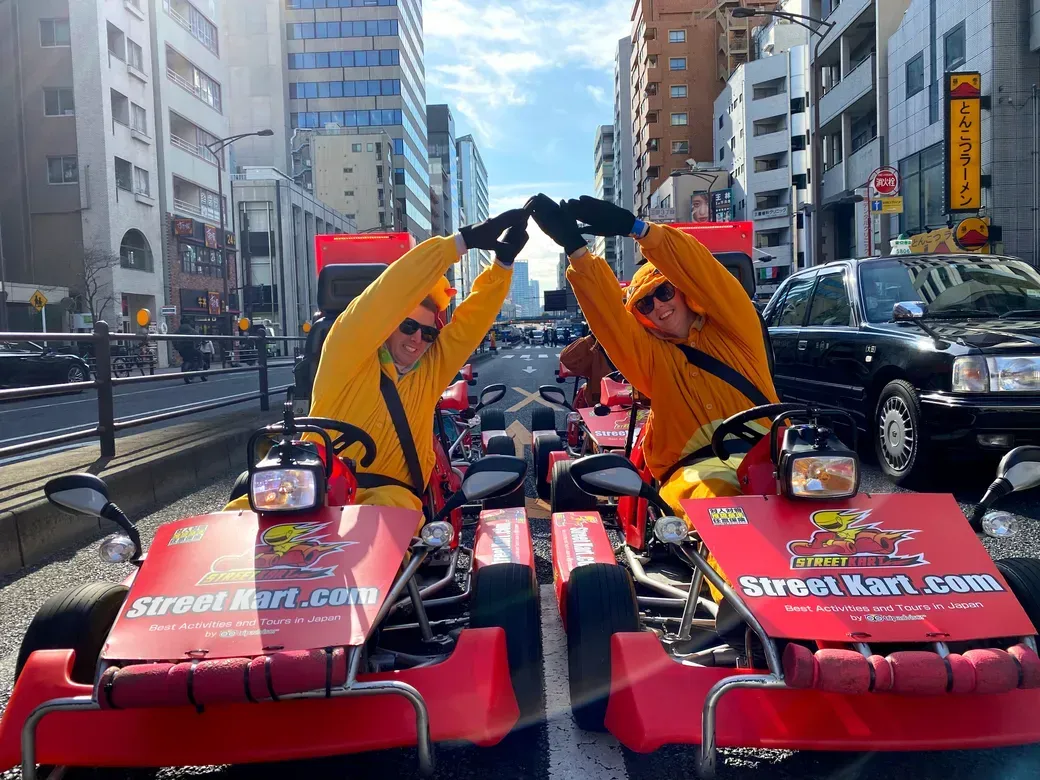
In addition to walking and train travel, some travelers consider public-road kart tours as a memorable element of their sightseeing experience. The Street Kart official site provides information on multiple Tokyo locations, with each store offering details on courses and access. According to the official site, Tokyo locations include Shibuya, Shibuya Annex, Shinagawa, Akihabara, Tokyo Bay, and Asakusa.
What sets a street kart experience apart from window-gazing sightseeing is how much more closely you can feel the atmosphere of the city. Of course, since you’re driving on public roads, understanding traffic rules and confirming details in advance is essential. With that in place, for travelers who want to feel the texture of Tokyo’s roads and the continuous flow of its streets, it’s the kind of experience that adds a completely different flavor to your itinerary.
The Street Kart official site provides organized details on store information, booking processes, available languages, and course information. The page for the Tokyo Bay location lists an estimated duration of about 1.5 to 2 hours, with a note that this can vary depending on traffic conditions. For student trips where predictable timing matters, it’s realistic to schedule your activities before and after with some breathing room.
The official site also outlines the flow on the day of your tour. You’re asked to arrive at least 30 minutes before your reservation time, followed by confirmation of your booking, presentation of required documents, baggage storage, costume selection, and a briefing. Rather than trying to squeeze in a last-minute booking on momentum alone, knowing the flow in advance makes everything go more smoothly.
License Information to Check Before Joining
When considering a street kart experience, one of the most important things to verify is your driving qualification. The official license information page is at https://kart.st/en/drivers-license/. It clearly outlines the document categories required to legally drive in Japan, with information available by country and region.
The official page lists the main categories as a Japanese driver’s license, an International Driving Permit based on the 1949 Geneva Convention, a driver’s license from designated countries accompanied by an official Japanese translation, and SOFA-related categories. One particularly important point: not just any international permit will do — the official page specifically notes that an “IDP(1949)” classification is required. Rather than relying on your own assumptions, you’ll need to confirm how your specific country or region is treated.
When planning your Tokyo trip, it makes sense to confirm license requirements even before booking flights and accommodations. The official site also notes that participants without the required original documents may not be able to join, and that refunds may not be available in such cases. Students and younger travelers in particular sometimes assume photos or copies on a smartphone will suffice — but you really do need to check the most current official guidance to confirm the original document requirements.
Practical Points to Check When Booking
When reviewing booking information on the Street Kart official site, here are some practical angles to consider. First, think about how well your chosen store fits with your overall sightseeing route. Whether you’re spending the day mainly around Shibuya, or including the bayside area, will affect which location works best. If you want to keep travel time short, picking a store near the area you’re already exploring will simplify your day.
Next is the meeting time. The official guidance asks you to arrive at least 30 minutes before your reservation. Tokyo stations are massive, and simply choosing the wrong exit can eat into more time than you’d expect. If it’s your first time visiting a particular store, make sure to factor in walking time from the station along with extra room to double-check directions.
Confirming what to wear also matters. The official site advises avoiding heels, sandals, and long skirts. This isn’t just about how you look during sightseeing — it’s a practical condition for actually being able to participate that day. While you’ll naturally want to travel light, it’s worth confirming the day before whether your outfit meets the requirements.
You’ll also want to factor in weather and traffic conditions. The official guidance states that tours generally proceed regardless of weather, but recommends contacting the store directly if anything is unclear. Travelers who like to stay flexible with their plans should double-check the official contact details and their booking information on the morning of the experience to be safe.
Tokyo Model Plan for Students and 20s Travelers
For younger travelers, the ideal itinerary balances variety and pace without being overstuffed — and still captures that uniquely Tokyo sense of contrast. Day one could be Shibuya, Harajuku, and Omotesando, where you feel the city’s density and the pulse of current trends. Start the morning walking around Shibuya, then head from Harajuku to Omotesando in the afternoon to combine shopping with café visits. For the evening, viewing the city lights from a nearby high floor or a slightly opened-up spot keeps the day’s travel from feeling heavy.
On another day, you could build around Shimokitazawa, Nakano, and Kichijoji. Treating it as a day focused on vintage clothing, miscellaneous goods, subculture, and leisurely walks reveals a side of Tokyo that’s distinct from central sightseeing. Even when friends in the group have different interests, these areas are close enough that meeting back up is easy, making them well-suited for splitting up and reconvening.
If you’re including a street kart experience, it’s practical to reduce the amount of walking before and after. For example, a light meal and a casual stroll in the morning, the tour in the afternoon or early evening, and dinner somewhere nearby afterward makes the timing much easier to manage. On days with experiential activities, avoiding packing too many museums or large shopping complexes into the same day will give you more breathing room overall.
A Sightseeing Approach for Travelers Who Love Photography
For students and 20s travelers exploring Tokyo, taking photos itself often becomes part of the journey’s purpose. In that case, rather than just hitting the famous spots, combining places with very different visual personalities adds real variety to your record. The crossing area in Shibuya captures urban density, Harajuku is all color and decoration, Shimokitazawa offers the character of independent storefronts, Kichijoji blends greenery with streets, and the bayside provides sky and water — even within the same Tokyo, the visual elements vary dramatically.
If you’re adding a street kart experience to your itinerary, capturing photos of the surroundings before and after also helps tie the day together as a coherent record. You’ll need to check the official information for any rules about photography during the experience itself, but at the very least, capturing the scenery before meeting up and after finishing helps create a consistent flow throughout your sightseeing day.
Realistic Tips for Transportation and Getting Around
In Tokyo sightseeing, the most common source of fatigue isn’t the sights themselves — it’s the travel. Station transfers, stairs, crowds, and the sheer number of exits drain your energy. On student trips, it’s easy to think “we’re still energetic, we’ll be fine,” but decision-making tends to get sloppier from late afternoon onward, so giving yourself extra time at major stations is essential.
To keep things easier, try not to bounce back and forth between the JR Yamanote line, private railways, and Tokyo Metro lines too much. Areas that connect on foot — like Shibuya, Harajuku, and Omotesando — should be grouped together. Destinations with a clear purpose, like Kichijoji or Shimokitazawa, deserve their own dedicated time. And the bayside should be treated as its own separate slot. Organizing your day this way makes everything flow more naturally.
If you’re joining a street kart experience, avoiding lateness before the start is especially crucial. The official site provides specific guidance on meeting times, so it’s best to arrive near the store with plenty of room to spare on the day. A “quick detour” during sightseeing can easily turn into a delay, so it’s wise not to overpack your schedule before the experience.
Enjoying Tokyo from Every Dimension
Tokyo isn’t just a city with lots of attractions — it’s a city where the quality of the experience differs dramatically from one area to the next. For student and 20s travel, you’ll find more satisfaction in being mindful of these differences and combining them, rather than racing through only the most famous spots. Feel the speed of the city in Shibuya and Harajuku, wander unique shops in Shimokitazawa and Nakano, decompress a bit in Kichijoji, and open up the view in the bayside. A street kart experience fits naturally into this kind of flow as one way to turn the act of moving itself into part of the adventure.
The Street Kart official site organizes store information, booking flow, course details, day-of procedures, and license information all in one place. If you’re considering joining, the practical approach is to first check the license information page to confirm what documents you’ll need, then choose a store that aligns with your sightseeing route and timing.
If you want to enjoy Tokyo sightseeing at a pace that feels right for students and travelers in their 20s, the key is to build your itinerary by reading the personality of each area and balancing the burden of travel — not just running on energy alone. Combined with walking-focused sightseeing, photography, and food adventures, adding time to see the city from another angle subtly changes how Tokyo presents itself. For the latest information including street kart experiences, please refer to kart.st.
A Note About Costumes
Our shop does not offer rentals of costumes related to Nintendo or “Mario Kart.” We provide only costumes that respect intellectual property rights.
