

A Deep Dive into Tokyo for Students and Young Adults: Combining City Exploration with Street Kart Experiences
Tokyo is a city where you can encounter wildly different vibes even on a short visit. Major commercial areas, neighborhoods steeped in history, cultural facilities, and waterfront landscapes are all packed into a relatively compact area, making it easy for students and travelers in their 20s to plan their movements. While simply hitting the classic spots is plenty fun, being mindful of each area’s unique character will dramatically transform your impression of Tokyo sightseeing.
This article organizes how young travelers can approach Tokyo sightseeing from the perspectives of street walking, photography, budget, and ease of transportation. On top of that, we’ll also objectively introduce the street kart experience—often considered as one element of Tokyo tourism—based on official information. For checking reservations and participation requirements, having both the official site kart.st and the license information page at https://kart.st/en/drivers-license/ handy will make your trip planning much smoother.
Key Points for Students and Young Adults Sightseeing in Tokyo
For students and travelers in their 20s, four points tend to be crucial when sightseeing in Tokyo: “transportation efficiency,” “budget,” “photogenic spots,” and “experience density.” While Tokyo has tons of attractions, cramming too much into one day means longer travel times and weaker impressions of each area. That’s why structuring your day with different themes for each half works well.
For instance, exploring cultural facilities and old downtown areas in Asakusa or Ueno in the morning, shopping and hitting cafes in Shibuya or Harajuku in the afternoon, and enjoying views from the bay area at night—creating this kind of flow lets you naturally experience the contrasts that make Tokyo so unique. The differences between Tokyo’s neighborhoods are dramatic, with the atmosphere shifting continuously even within a single day. This very transformation becomes a tourism value in itself and contributes to higher satisfaction for young travelers.
If you want to keep your budget down, combining free street walking with focused paid experiences is a realistic approach. There are plenty of parks, shopping streets, scenic walkways, and unique neighborhoods you can enjoy for free, making it easy to separate when to spend and when to save. This flexibility is one of Tokyo sightseeing’s biggest perks.
Classic Tokyo Areas That Are Easy for Young Travelers to Explore
Shibuya and Harajuku Area
Shibuya is where you can feel Tokyo’s urban energy most vividly. The station area is bursting with foot traffic, and commercial facilities, cafes, fashion, music, and events are all concentrated here. For students and 20-somethings visiting Tokyo for the first time, it’s the kind of place where you can get that “I’m in Tokyo!” feeling in no time. For photos, the hours from evening into night, when the city’s lights multiply, are perfect for capturing striking shots.
Harajuku is within walking distance from Shibuya, yet its atmosphere is noticeably different. Around Takeshita Street, you’ll find concentrations of light bites, sweets, and fashion-related shops, and just walking around delivers so much visual stimulation that you naturally get caught up in the travel excitement. Step a little further away, though, and you can transition to the calmer scenery around Omotesando and Meiji Shrine. The close proximity of bustle and tranquility perfectly symbolizes how easy Tokyo sightseeing is to assemble.
Shimokitazawa, Nakano, and Koenji Area
If you want to see neighborhoods with independent shops and cultural character rather than just trendy mega-facilities, areas like Shimokitazawa, Nakano, and Koenji become great candidates. Shimokitazawa is packed with vintage clothing stores and small eateries, making it a comfortable place to spend time just walking around. Nakano is often discussed in the context of subculture, and even just browsing through its commercial facilities gives you a distinctive vibe. Koenji has a strong image of vintage clothes and live music culture, making it an area where you can really feel the unique character that’s typical of the Chuo Line.
These neighborhoods aren’t necessarily developed as polished tourist destinations, but they’re places where you can get close to Tokyo’s everyday life culture and how young people actually spend their time and money. Rather than being purely photo-focused, these are areas where the fun lies in walking around and discovering things.
Asakusa and Ueno Area
If you want to experience Tokyo through history and cultural facilities, combining Asakusa and Ueno is a smart move. Asakusa is full of streetscapes around temples and shrines along with long-established shops, giving you that quintessential Japanese atmosphere. Since it draws lots of tourists, mornings are best if you want to walk around in relative peace. Ueno is home to parks, art museums, and museums, making it easy to adjust your itinerary based on weather or who you’re traveling with.
Asakusa and Ueno are close to each other, making it easy to pack cultural elements into a single day. You can see Tokyo at a different tempo from the bustling city center, which also makes it easier to balance with shopping-focused parts of your trip.
Toyosu, Odaiba, and Bay Area
If you’re after modern cityscapes and the openness of waterfront vistas, the bay area including Toyosu and Odaiba is the way to go. With high-rise urban landscapes, bridges, seaside walkways, and expansive views, this area gives you a totally different impression from the city center. The travel itself becomes part of the sightseeing experience, and the atmosphere shifts dramatically between day and night.
Nights especially are stunning, as the light-filled urban core combines with the waterfront space, making this a great way to wrap up the latter half of your itinerary. You can adjust how much you walk, and you can combine indoor facilities with outdoor scenery—features that make this area easy to work with for students and young travelers.
Building a Budget-Conscious Tokyo Itinerary
For student trips, it’s more realistic to set aside plenty of free or low-cost time rather than filling every slot with paid attractions. Tokyo packs so much information into its streets that simply walking around often qualifies as sightseeing in itself. Use cafes as rest stops, keep lunch prices modest, and only stretch the budget a bit for dinner—creating this kind of variation throughout the day prevents burnout.
Trains will be your main means of transportation. You’ll often jump between the Yamanote Line, Tokyo Metro, Toei Subway, and private railways, so having a transit IC card prepared makes everything easier. Rather than trying to visit attractions in a straight line, keeping in mind “grouping together neighborhoods in the same direction” helps keep both travel time and transportation costs down.
Also, if photography is your goal, simply avoiding peak crowded times can change your satisfaction level dramatically. Early morning Asakusa, evening Shibuya, nighttime bay area—being conscious of the chemistry between time and place lets you capture impressive shots without having to push yourself to travel far.
Street Kart as One Element of Tokyo Sightseeing
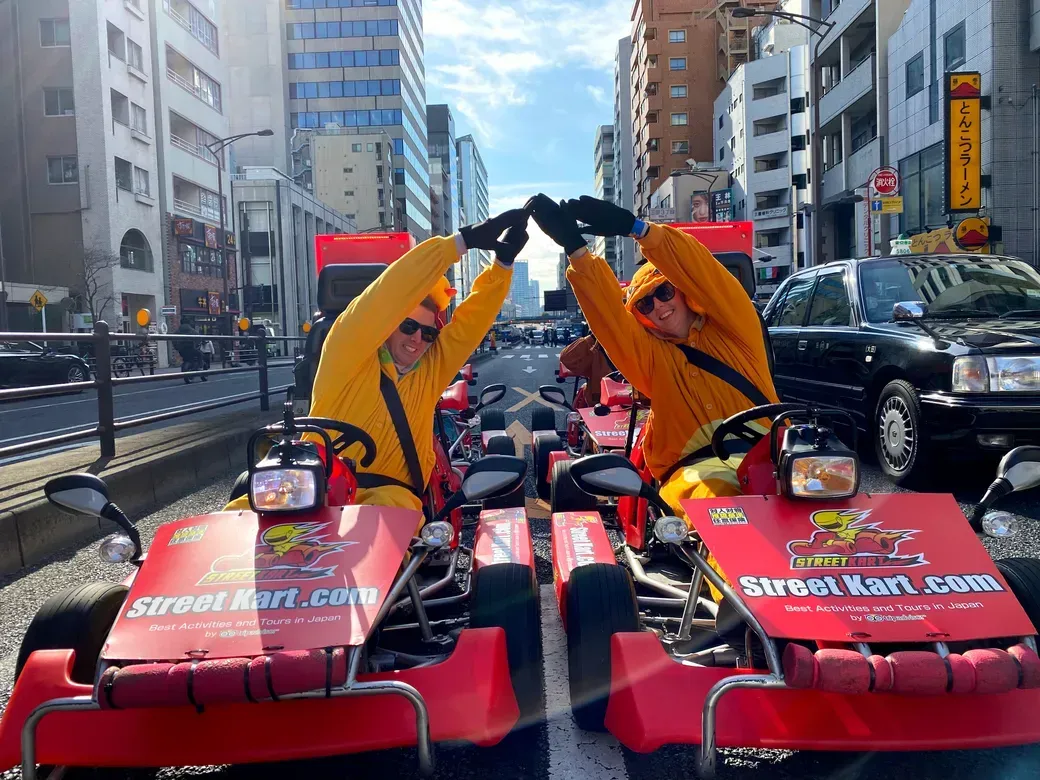
For those who want to experience Tokyo’s cityscape in a more dynamic way during their visit, the street kart is one option worth considering. The street kart is a public road karting experience service operating in Japan, with the official site at kart.st. For the Tokyo area, multiple store listings are featured on the official site.
What makes this experience stand out is that you get to engage with urban scenery from a perspective that’s totally different from walking or looking out from a car window. The configuration lets you feel the city’s sense of scale, the spread of the roads, and the distance to buildings—all through the act of moving itself. With street walking as the core of your sightseeing, incorporating this as a half-day activity adds great variety to your itinerary.
The official site has course information for each location, with required time varying based on the course and traffic conditions. For example, the Tokyo Bay store’s listing indicates approximately 1.5 to 2 hours. When working it into your sightseeing plans, including meeting times and travel time, it’s easier to leave some buffer in your schedule before and after.
Practical Points to Check Before Participating
The first thing to verify when considering the street kart is the license requirement. The official license information page at https://kart.st/en/drivers-license/ explains the types of licenses valid for driving in Japan. The page organizes information by category, including Japanese driver’s licenses, International Driving Permits based on the 1949 Geneva Convention, driver’s licenses from applicable countries with official Japanese translations, and SOFA-related licenses. Whether documents issued in your home country are valid in Japan depends on the country and system, so before booking, you absolutely need to check the page that matches your specific situation.
Additionally, the official site notes that if you don’t bring the original required documents, you won’t be able to participate and won’t be eligible for a refund. To avoid being stuck making decisions on the spot, it’s essential to verify license information early in your trip planning and gather all necessary documents. For International Driving Permits too, not all formats are valid in Japan, so it’s wiser not to self-judge that “any international license will be fine.”
Regarding attire, the official site advises against heels, sandals, and long skirts. Even if you’re planning to use your sightseeing outfit as-is, it’s smoother to prepare comfortable, easy-to-move-in clothes just for participation day. Furthermore, the official guidance specifies arriving at the store 30 minutes before the meeting time. If you’re scheduling other sightseeing plans before or after, you’ll need to plan transportation with extra time built in.
Model Itineraries Easy to Incorporate for Students and 20-Somethings
A structure that young travelers can enjoy without overdoing it is to set aside the morning for street walking, the afternoon or evening for an experience, and the night for a lighter meal and scenery. For instance, you could tour cultural spots in Asakusa or Ueno in the morning, do a street kart experience in the afternoon, and enjoy views in the bay area or city center at night—this kind of arrangement makes it easy to combine Tokyo’s different layers into a single day.
Another approach is to start with walking around Shibuya or Harajuku, then schedule the street kart for the next day or a separate day. Splitting up days focused on photography and shopping from days centered on mobile experiences helps distribute fatigue. Especially on short visits, creating days with distinctly different impressions tends to boost overall trip satisfaction more than cramming everything into one day.
For group travel, you’ll also want to confirm that everyone’s document conditions and interests align. Street walking is easy for everyone to join, but the street kart has license requirements as a prerequisite, so participation eligibility may vary from person to person. In such cases, scheduling plans in areas where everyone can easily reunite before and after the experience makes overall trip coordination smoother.
Seasonal Perspectives on Tokyo Sightseeing
Tokyo’s walkability and scenic impressions change by season. Spring brings attention to parks and riverside scenery, making it well-suited to walking-focused itineraries. Summer brings strong daytime heat, so you’ll need to incorporate indoor facilities and evening activities for adjustment. Autumn has comparatively more comfortable walking days, making it easier to balance street exploration with photography. Winter offers some days with clear, crisp air and great visibility, but if you’ll be outdoors at night for long stretches, cold-weather preparation becomes essential.
When including a street kart experience, season-appropriate preparation is also crucial. The official site notes that tours typically proceed regardless of weather, but suggests contacting the store if you have concerns. The more fixed your travel dates are, the more important it becomes to check the day’s weather conditions and store updates.
Thinking About How to Make Tokyo Sightseeing More Three-Dimensional
Tokyo’s appeal isn’t just in the number of attractions—it’s in how areas with completely different characters are packed close together. For students and travelers in their 20s, being able to compare these differences within a short timeframe is one of Tokyo sightseeing’s biggest advantages. By combining major commercial areas, old downtown neighborhoods, cultural facilities, waterfronts, and night views without leaning too heavily on any single theme, your impression of Tokyo becomes much more three-dimensional.
Within that framework, the street kart experience can be considered as one way to see the city. By checking reservations and participation requirements through official information and placing it sensibly within your overall itinerary, you can easily add a perspective that’s different from walking-based sightseeing. Refer to kart.st for details and booking, and check https://kart.st/en/drivers-license/ for individual license requirement conditions.
What you need to experience Tokyo to the fullest isn’t continuously adding more plans—it’s switching the types of experiences to match each area’s unique character. By combining street walking, cultural facilities, scenery, food, and—if conditions allow—a street kart experience, even students and 20-somethings can build a dense, memorable Tokyo sightseeing trip within a realistic budget and timeframe.
Notice Regarding Costumes
Our shop does not offer rentals of Nintendo or “Mario Kart”-related costumes. We only provide costumes that respect intellectual property rights.
