
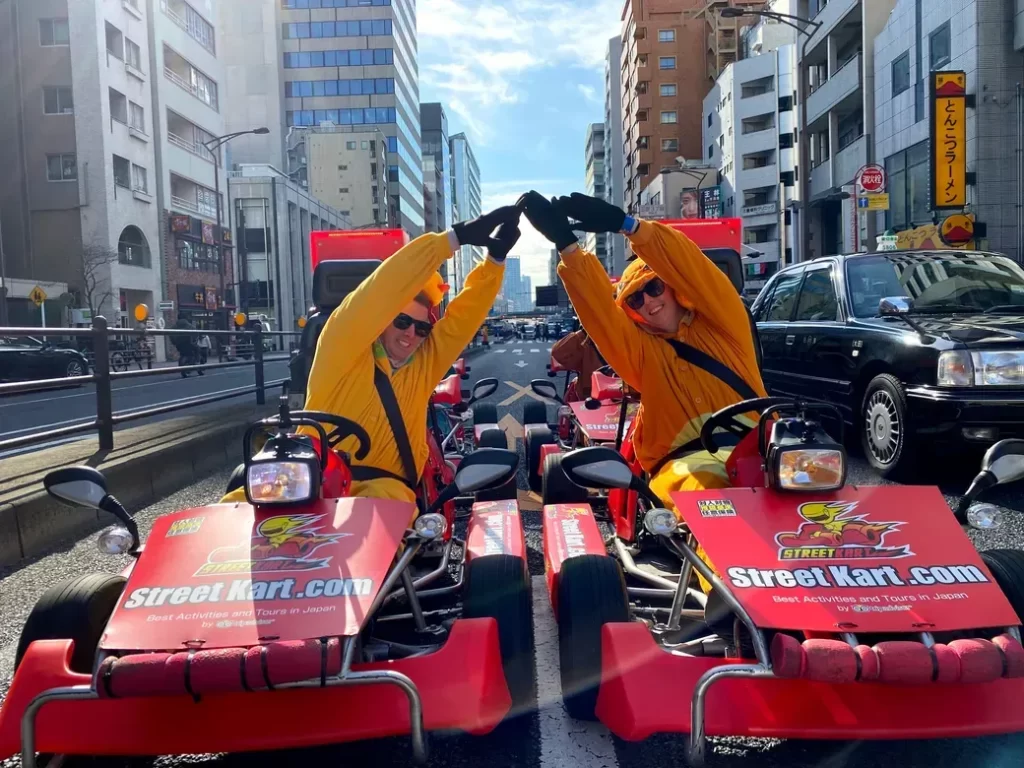
A Tokyo Travel Guide for Students and Twenty-Somethings, Plus the Street Kart Experience
Tokyo is a city where you can sense the distinct character of each neighborhood, even on a short visit. The massive scramble crossing in Shibuya, the buzz of Harajuku, the historic scenery of Asakusa, the open feel of the bayside area — the atmosphere shifts every time you move between areas. For students and travelers in their twenties, organizing “which neighborhoods to walk” and “what time of day to visit” within limited time and budget makes it much easier to build a relaxed sightseeing plan.
This article is for students and twenty-something travelers planning a trip to Tokyo. We’ll cover the essentials of strolling around the city, areas that lend themselves to photography, ways to think about getting around, and the Street Kart experience as one option worth considering for your Tokyo itinerary — all presented with measured, objective information. For the latest information on the Street Kart experience, please always check the Street Kart official website.
Things Students and Twenty-Somethings Should Keep in Mind for Tokyo Sightseeing
When sightseeing in Tokyo, it’s important not to pack too many spots into a single day. Even areas that look close on a map can take longer than expected to reach due to in-station transfers and crowds. Grouping nearby places together — half a day in Shibuya, Harajuku, and Omotesando, half a day in Asakusa and Ueno, half a day in the bayside area — makes movement much smoother.
For students and twenty-somethings, trips tend to work well when they include not just sightseeing landmarks but also time to soak in the atmosphere of the streets. Tokyo has many neighborhoods where cafes, vintage shops, lifestyle stores, observation spots, shrines and temples, and riverside promenades sit relatively close together, so the time you spend walking itself becomes part of the experience. Rather than locking in every detail, anchor your plan around one or two destinations and let the surrounding area unfold from there.
Also, if you want to capture photos, natural light from morning through early afternoon, or the softer light of early evening, often works in your favor. Night views are striking, but they come with crowds and camera shake, so keeping travel times short and narrowing down your shooting spots tends to make things easier.
Classic Tokyo Areas That Are Easy to Explore
Shibuya and Harajuku
Shibuya is a great area if you want to see Tokyo’s quintessential urban landscape. The area around the scramble crossing has that signature look where the flow of people merges with towering buildings, and it’s one of those spots that tends to leave a strong impression on first-time visitors. Large shopping complexes, cafes, observation points, and restaurants all cluster within walking distance, making it easy to spend time on foot.
Walk over to Harajuku and the vibe of the streets shifts dramatically. The buzz of Takeshita Street, the strollable feel of Cat Street, the tree-lined Omotesando avenue — even within the same area, the scenery varies. Whether your focus is shopping or just wandering, it’s a route that pairs well with short trips for students and twenty-somethings.
Asakusa and Ueno
Asakusa and Ueno are areas where you can easily weave in historic streetscapes and cultural facilities. In Asakusa, walking around the temple grounds and the streets lined with souvenir shops lets you take in the atmosphere of traditional Japan. Head over to Ueno and museums, galleries, and parks come into view, making it easy to adjust your plans based on the weather or your companions’ preferences.
If you want to experience Tokyo at a different pace from its lively entertainment districts, this area is a strong candidate. For photography too, you’ll find plenty of compositions different from the urban scenery — historic buildings, gates, lanterns, stone-paved paths, and temple grounds.
The Bayside Area
If you want to see a more open side of Tokyo, the bayside area is an option. The waterfront, bridges, wide roads, large structures, and distant high-rises offer a slightly different perspective from the city center. The expansive views during the day, and the reflections of light and silhouettes of bridges in the evening and night, leave a strong impression — making it well-suited for both strolling and photography.
If you’re considering the Street Kart experience, the bayside area is also one where related information is easy to check. The Street Kart official website lists multiple Tokyo locations, including Tokyo Bay, Shibuya, Shibuya Annex, Shinagawa, Asakusa, Akihabara #1, and Akihabara #2. For the actual departure store and course details, it’s essential to check the official website before booking.
The Street Kart Experience as a Tokyo Sightseeing Option
If you want to add a perspective different from walking or train travel during your Tokyo sightseeing, the Street Kart experience is one way to do that. Street Kart publishes store information including Tokyo locations, reservation details, and various guides on its official website, and the things you need to check before participating are relatively well organized. When considering it as part of your sightseeing, first check the Street Kart official website and see whether it fits your stay and travel plans.
A defining feature of the Street Kart experience is that, unlike ordinary city walking, you take in the breadth of the streets and the roadway scenery as you move. That said, rather than declaring its appeal in absolute terms, it’s worth recognizing that there are people it suits and people it doesn’t. For travelers focused on photography or food tours, prioritizing walking-based sightseeing may make planning easier. On the other hand, for those who meet the driver’s license requirements and want to include an experiential activity in their itinerary, it’s an option worth comparing.
On the official website, the Tokyo Bay store guide indicates an estimated duration of about 1.5 to 2 hours, noting that it varies with traffic conditions. The same page also outlines the pre-departure flow: arriving at least 30 minutes before your reservation, reservation confirmation, presenting your license and ID, filling out a questionnaire, storing your belongings, and receiving an explanation of driving procedures and safety information. This advance guidance is important when planning your travel schedule.
Driver’s License Requirements You Must Check Before Participating
If you’re considering the Street Kart experience, the first thing to check is the driver’s license requirements. This is one area where you can’t rely on guesswork — you need to base your check on the official guidance. The Street Kart driver’s license information page outlines the types of licenses and permits needed to legally drive a vehicle in Japan.
The official guidance lists the following as the main valid license conditions within Japan:
- A Japanese driver’s license
- An International Driving Permit (IDP) based on the 1949 Geneva Convention
- A driver’s license from a designated country or region accompanied by an official Japanese translation
- SOFA-related documents for U.S. military personnel stationed in Japan
The official website also explains that “what matters is not nationality but which license or permit is valid in Japan,” and notes that what is valid in Japan may not match how things are handled in other countries. Furthermore, the Tokyo Bay store guide page states that if you do not bring the required original documents, you cannot participate and are not eligible for a refund. Since licenses and translation documents may need to be presented as originals rather than copies, be sure to recheck the latest guidance before departure.
The designated countries and required documents are subject to change. Travelers from overseas in particular should not assume “my country’s license should be fine.” Always check the applicable conditions on the driver’s license information page before moving forward with a reservation.
Practical Points to Review Before Booking
For trips by students and twenty-somethings, practical checks tied directly to day-of logistics matter just as much as sightseeing information. If you’re including the Street Kart experience, organizing the following points helps you build a smoother plan.
First, leave breathing room around your reservation time. The official website’s activity flow says to arrive at least 30 minutes before your reservation. If you pack walking or meals too close to that time, the trip from the station to the store can get hectic. In Tokyo especially, distances can vary depending on which exit you use from the same station, so it’s easier to manage if you avoid stacking major plans within an hour before and after.
Next, clothing. The official website advises avoiding heels, sandals, and long skirts. Across all of your sightseeing, since Tokyo involves a lot of walking, basing your outfit on shoes and clothes that are easy to move in helps protect your overall satisfaction. Even when you want to look good in photos, prioritizing comfort first and then adjusting color and silhouette is more practical.
Pack light, too. The Tokyo Bay store guide on the official website describes a flow where your belongings go into a locker, but carrying heavy luggage during sightseeing slows you down at stations and stores. If you’re sightseeing before or after check-in, using your accommodation’s luggage storage or a station locker first is worth considering.
How to Build a Tokyo Sightseeing Model for Students and Twenty-Somethings
If you want to combine Tokyo sightseeing with the Street Kart experience, it’s easier to plan if you set a clear theme for each day. For example, the morning for history- and culture-focused walks in Asakusa or Ueno, the afternoon for urban strolling in Shibuya or Harajuku, and Street Kart as an experiential activity on a separate day. Rather than cramming everything into the same day, splitting things by purpose makes both movement and mindset easier to manage.
On a day in the bayside area, you can pair walking time along the waterfront with experiential plans more naturally. The official guide for the Tokyo Bay store mentions about a 10- to 13-minute walk from Shin-Kiba Station. When planning movement based around the store, including the walking time from the station in your schedule helps reduce day-of delays.
On the other hand, popular areas like Shibuya and Asakusa can take half a day to a full day just for sightseeing. Even if you’re considering the Street Kart experience nearby, you need to check the actual store location, meeting time, duration, and where to go after the experience individually. The official website lists multiple Tokyo store names, but courses and routes differ by store, so don’t assume “any Tokyo location is the same” — read the reservation page details carefully.
Tips for Balancing Photography and Strolling
For students and twenty-somethings traveling in Tokyo, photos often play a big role in overall trip satisfaction. Tokyo is unusual in that crowded and quiet places sit side by side, making it easy to vary the mood of your photos within the same day. Dense urban shots in Shibuya or Shinjuku, historic streetscapes in Asakusa, open night views and waterfront scenery in the bayside — splitting your themes by area helps organize your compositions.
If you’re including the Street Kart experience, it’s more realistic to set aside separate time for photography. Time focused on the experience itself and time spent calmly photographing the streets are easier to manage when treated separately. Across your trip, a flow of strolling and photography in the morning, a reservation-based experience in the afternoon or early evening, and dinner and a light walk at night tends to be relatively easy to put together.
Final Pre-Trip Checks
When including the Street Kart experience in your Tokyo sightseeing, reviewing the following items right before booking or the day before makes decisions easier.
- The reservation store and meeting time
- The nearest station and walking time to the store
- Original copies of required licenses, translation documents, and ID
- Whether your clothing is easy to move in
- Whether your sightseeing plans before and after the experience are realistic
- Whether the latest information is reflected on the Street Kart official website
License requirements in particular can affect whether you can participate on the day if you proceed based on traveler assumptions. If you’re visiting from overseas, checking the driver’s license information page both before departure and before booking helps reduce any misalignment in understanding.
Summary
For students and twenty-something travelers, Tokyo is a city where walking-based sightseeing, strolling, photography, shopping, and cultural experiences all combine easily. By mixing urban areas like Shibuya and Harajuku, historic areas like Asakusa, and open areas like the bayside, you can take in different sides of Tokyo even on a short stay.
Within that, the Street Kart experience is one option worth considering for your Tokyo sightseeing. However, participation requires confirming valid Japanese driver’s license requirements, and there are practical elements you should review in advance, including reservation time, meeting, clothing, and required documents. When considering it, always use the Street Kart official website and the driver’s license information page as your reference, and build your plan based on the latest information.
A Note on Costumes
We do not offer rentals of Nintendo or “Mario Kart”-related costumes. We provide only costumes that respect intellectual property rights.

