
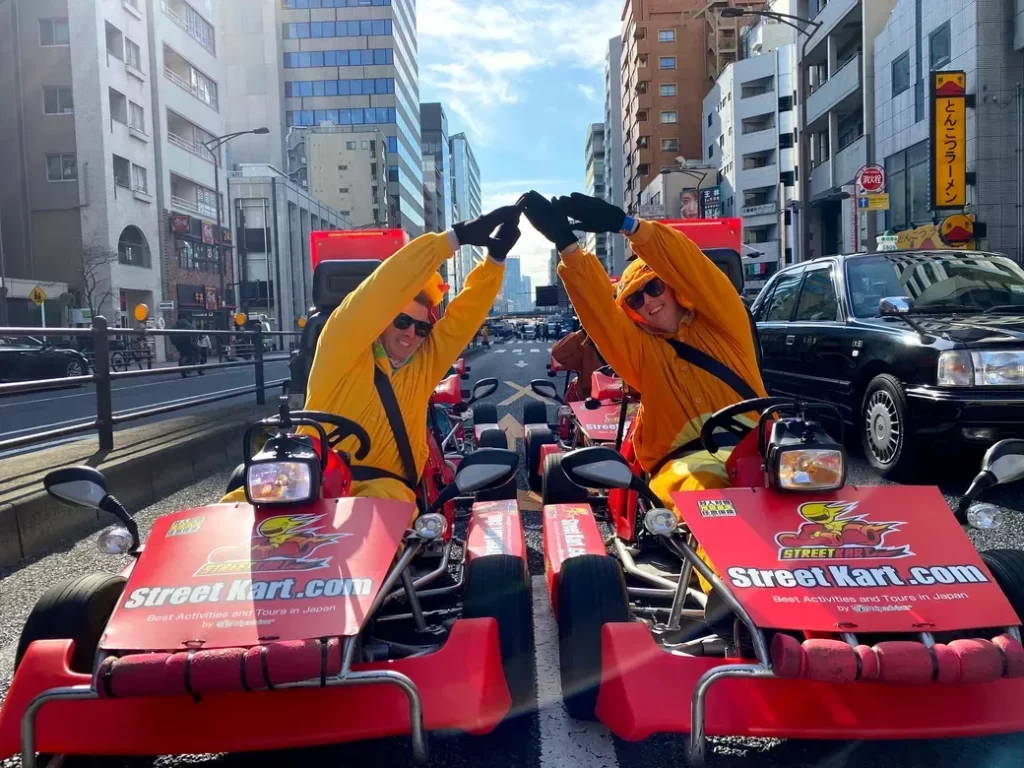
Essential Tokyo Sightseeing Guide and Street Kart Experience for Students and 20-Somethings
For students and 20-somethings planning a trip to Tokyo, the city’s easy mobility, distinct neighborhood personalities, and photogenic scenery are huge draws. Within a single day, you can shift from massive shopping districts to historic streetscapes, culture-packed alleyways, and the open waterfront — that variety is uniquely Tokyo. Just hitting the classic spots in sequence makes for a great trip, but if you understand what makes each area tick and combine them strategically, you can pack a remarkable amount into a limited itinerary.
This article walks you through the Tokyo sightseeing areas that work best for students and 20-somethings, budget-conscious approaches to getting around, and tips on the best times of day for photos. It also covers the street kart experience — driving on public roads — based on official information. If you want to slot a street kart experience into your itinerary, you’ll need reservations and license verification ahead of time, so it helps to nail down these details alongside your other sightseeing plans.
Key Points to Keep in Mind for Tokyo Sightseeing as a Student or 20-Something
Tokyo has an enormous rail network, so moving between several areas in a short time is genuinely easy — but if you cram too much in, you can end up spending most of your day just in transit. For student trips and small-group travel in your 20s, it’s practical to split the day into morning, afternoon, and evening zones. For example, you might tour cultural sites and temples in Asakusa or Ueno in the morning, head to Shibuya or Harajuku in the afternoon, then finish the day on the waterfront or at an observation spot. That kind of routing lets you feel Tokyo’s contrasts in a single day.
For younger travelers, the day tends to revolve around shopping, photo-taking, neighborhood walks, and quick food stops — activities that deliver satisfaction in short bursts. Mixing time-fixed venues with free-form street wandering keeps the transit burden lower while keeping the day rewarding. If you’re adding a street kart experience, scheduling walk-heavy sightseeing before and after helps balance the whole day.
Classic Tokyo Areas That Work Well for Students and 20-Somethings
Shibuya and Harajuku
Shibuya is a popular entry point for Tokyo sightseeing. The streets around the station are alive with foot traffic, shopping centers, cafés, music, fashion, and nighttime cityscapes — you can experience multiple layers of Tokyo in one place. Crowds gather around the famous scramble crossing for photos, and the vibe shifts dramatically between day and night. From evening into nighttime, signage and building lights intensify, making it easier to capture that quintessential urban look.
Move on to Harajuku and the atmosphere shifts subtly even though you’re still downtown. Takeshita Street is dense with street food, accessories, and fashion, so you can cover it quickly. Walk toward Omotesando and the tree-lined boulevards take over, giving your photos a more refined feel. Walking from Shibuya through Harajuku to Omotesando in one stretch lets you compare Tokyo’s youth culture and its polished commercial side — a great combination for a first visit.
Shimokitazawa and Nakano
Shimokitazawa is a walkable area packed with vintage clothing stores, small restaurants, and distinctive storefronts on every block. Unlike sightseeing focused on large complexes, this is a neighborhood for discoveries down each side street, so it works better when you don’t over-plan. For student trips, it’s flexible on the shopping budget and rewarding even in short visits.
Nakano makes it easy to take in a station-front shopping street and a layered subculture scene in one go. Plenty of it is indoors, which makes it a solid backup option when the weather is unpredictable. If you want to sightsee during hot weather or rain without long stretches outdoors, Nakano is worth considering.
Asakusa and Ueno
If you want to experience Tokyo’s traditional scenery, pairing Asakusa and Ueno gives you a natural flow. In Asakusa, the streets around the temples and the surrounding restaurants line up neatly along the sightseeing route, so it’s easy to cover on foot. Going relatively early in the morning often lets you wander before the heaviest crowds arrive.
Head to Ueno and you’ll find parks, art museums, museums, and the shopping area around the station all clustered together — perfect for itineraries that include cultural venues. It’s a fit for people who want a calmer pace or are interested in exhibits, not just street walking. For travelers who want to feel Tokyo’s cultural depth alongside its modernity, this combination really delivers.
The Waterfront and Odaiba
If you want a more open, expansive side of Tokyo, the waterfront is a strong candidate. Unlike central Tokyo, the wide sky and water-facing views leave a lasting impression, and it’s an easy area to work into a day that includes night views. With large complexes and wide walkways, it also suits anyone who wants to take photos at a relaxed pace.
The waterfront completely changes character between daytime and night. By day you get sprawling urban panoramas; by night the lights of bridges and high-rises take over — making it an ideal way to wrap up a day of Tokyo sightseeing.
How to Think About Photo-Taking While Sightseeing in Tokyo
For students and 20-somethings, “is it photogenic?” can be a major factor in choosing destinations. In Tokyo, the best timing depends on whether you want to lean into the crowds as part of the urban landscape or shoot quieter hours that highlight buildings and streetscapes.
In areas like Shibuya and Shinjuku where the flow of people defines the scene, evening into nighttime captures the city’s density best. On the other hand, in places like Asakusa or Omotesando where you want the architecture and streets to take center stage, morning to late-morning light usually makes the buildings and streets read more clearly. On the waterfront, paying attention to the sky’s color around sunset lets you capture both the water and the architecture nicely.
If you’re shooting mostly on a smartphone, plan for a lot of walking — keep your bag light, bring a portable charger, and stabilize your hands for night shots. Rather than locking in shooting spots in advance, finding good frames within the natural flow of your walk tends to keep the day’s rhythm intact.
Building a Budget-Conscious Tokyo Itinerary
For student trips, ranking priorities across food, transportation, and experiences makes it easier to stay satisfied throughout. For example, keeping lunch on the affordable side and spending a little more time and money on dinner is a structure that doesn’t eat into sightseeing time. Tokyo has convenience stores, chain restaurants, and independent eateries side by side, so you can adjust flexibly based on crowds or where you’re headed next.
For transportation, grouping walkable areas into the same day boosts efficiency. Simply pairing close-together areas like Shibuya–Harajuku or Asakusa–Ueno cuts down on transit hops. On days when you’re booking something time-fixed like a street kart experience, leaving extra room in the surrounding schedule keeps the day flowing.
The Street Kart Experience as a Tokyo Sightseeing Option
For those wanting to experience Tokyo’s cityscape from an angle that’s different from walking or observation decks, the street kart experience is one option worth considering. The official Street Kart website provides information on multiple Tokyo locations, reservation pathways, and course details for each shop. You can find the details on the official site at https://kart.st/.
What sets this experience apart is that, unlike walking between fixed sightseeing spots, you take in the cityscape continuously while driving on public roads. Walking lets you stop and study details, but it’s harder to feel the flow between districts and how neighborhoods connect to each other. The street kart experience is well-suited to anyone who wants the act of moving through the city to be part of the sightseeing itself.
The Street Kart official site also lists locations beyond Tokyo, but if you’re using this as a Tokyo guide, it’s important to check the Tokyo-specific shop information and reservation conditions individually. Since each location has its own offerings and routes, the practical approach is to read the page for the specific shop you’re planning to visit before adding it to your plan.
Official Information to Check Before Participating
When considering a Street Kart experience, license verification is especially important. The official license guidance page lays out which licenses and permits you need to drive on public roads in Japan. The guide covers Japanese driver’s licenses, International Driving Permits based on the 1949 Convention, translation documents required depending on the country of issue, SOFA-related guidance, and more. License validity is based not on nationality but on the type of license or permit you hold. Check the latest conditions at https://kart.st/en/drivers-license/.
The official site also notes that you cannot participate if you don’t bring the original required documents. Rather than only securing a reservation when building your itinerary, it pays to check the license document requirements and what you need to bring first — that helps you avoid backtracking. This is especially worthwhile for travelers on short stays where rescheduling is difficult.
The official site also covers day-of flow: arriving before your reservation time, check-in procedures, how belongings are handled, and the pre-departure briefing. Experience times can vary depending on the course and traffic conditions, so leaving cushion in your before-and-after plans makes the day easier to manage.
Tips for Working a Street Kart Experience into Your Itinerary
For student and 20-something trips, the key is balancing walking, photography, food, and experiences across limited days. If you’re including a street kart experience, keeping either the morning or afternoon of that day lighter helps you stay flexible. Approaches like walking around Asakusa or Ueno in the morning and slotting your reservation in the afternoon, or wandering Shibuya and Harajuku at midday and saving a different area for evening, separate the walking-heavy sightseeing from the experience and keep the day from feeling rushed.
For what to wear, treating it like a normal sightseeing outfit isn’t quite right — prioritize ease of movement. The official site advises against high-heeled shoes, sandals, and long skirts. Rather than choosing your outfit purely for photos, picking shoes and clothes that work for both moving around and the experience itself will make your day far more comfortable.
When booking, look not just at the date you want but also the transit distance before and after. Tokyo’s neighborhoods each have distinct vibes, so simply pairing the experience location with that area’s other attractions on the same day adds cohesion to the trip. A practical approach is to look at the shop information and reservation routes on the official site at https://kart.st/ and pick a location near your accommodation or your sightseeing route.
Where the Street Kart Experience Fits in Overall Tokyo Sightseeing
The street kart experience is fundamentally different in character from staples like temple visits or shopping. It suits people who want to feel Tokyo as a continuous flow of motion rather than walking — but it also comes with participation requirements that need to be confirmed in advance. So think of it less as something to add casually on the day and more as a sightseeing option you prepare for during the trip-planning stage.
For student and 20-something travel, having even one strong, distinctive experience in your itinerary leaves a lasting impression on the whole trip. On top of walking, food, and shopping, if you’re considering an option that turns transit itself into sightseeing, start by checking the official information and verifying that it fits your itinerary and conditions.
Summary
Tokyo has many faces — a trend-setter, a hub for cultural institutions, a waterfront with open horizons — and each area carries a very different personality. For student and 20-something travel, how you combine these on a day-by-day basis dramatically shapes the impression you take away. Feeling the city’s energy in Shibuya and Harajuku, touching history and culture in Asakusa and Ueno, and seeing the scenic openness of the waterfront is a flow that captures Tokyo’s range in a digestible way.
On top of that, if you’re considering a street kart experience, check the official site at https://kart.st/ and the license guidance page at https://kart.st/en/drivers-license/ in advance, and build the experience into your plan after confirming participation conditions, required documents, and shop-specific details. Preparing based on solid information makes it much easier to find the Tokyo itinerary that fits you best.
Notice Regarding Costumes
Our shop does not rent out costumes related to Nintendo or “Mario Kart.” We provide only costumes that respect intellectual property rights.

