
The Ultimate Tokyo Travel Guide for Students and 20-Somethings | Combining City Walks with Street Kart Experiences
Tokyo stands out as one of the most appealing destinations for students and travelers in their 20s. Each neighborhood has its own distinct atmosphere—from trendsetting hotspots to calm residential streets, traditional downtown vibes, and the open feel of the bayside areas. Even on a short stay, you can soak in completely different sides of the city. With its extensive railway network, Tokyo also makes it easy to tailor your itinerary to your budget and interests, which is a perfect match for younger travelers.
When people think of Tokyo sightseeing, they often imagine racing through all the famous spots in one go. But honestly, taking your time to explore each neighborhood at a leisurely pace often leads to a more satisfying experience. Some areas, like Shibuya and Harajuku, are constantly buzzing with people, while others, like Kichijoji and Koenji, are perfect for enjoying the unique character of each shop. And here’s the fun part—adding a Street Kart experience to your sightseeing route can completely change how you see the city.
In this article, we’ll cover the must-visit areas in Tokyo for students and 20-somethings, budget-conscious ways to get around, the best times of day for taking photos, and what you need to know when adding a Street Kart experience to your itinerary—all from a balanced, objective perspective. For information about Street Kart, we’ll be referencing details from the official website. For bookings and store information, please check the Street Kart Official Site.
Why Tokyo Is So Easy for Students and 20-Somethings to Plan Around
Tokyo makes it remarkably easy to organize your trip by area and purpose. For shopping and city buzz, Shibuya and Harajuku are go-tos. Into vintage clothes and music culture? Shimokitazawa and Koenji are calling your name. Want to dive into subculture and quirky commercial complexes? Head to Nakano. Looking for waterfront views and wide-open spaces? Odaiba is your spot. The character of each area is pretty clearly defined.
This clarity is a huge plus for student travel where budgets and schedules are tight. You don’t have to cram your day from morning to night—just narrow it down to two or three areas and the day flows naturally. If you want to save on transportation, picking neighborhoods with lots of walkable territory lets you control both costs and time.
Plus, Tokyo offers plenty to enjoy for free or on a tight budget. The cityscape itself, shopping streets, shrine approaches, parks, and scenery around observation spots—your destinations don’t have to be expensive paid attractions. You can mix in cafes and shopping, focus on photography, or center your day around food. The same area can offer wildly different experiences depending on your approach.
Must-Visit Classic Tokyo Areas
Shibuya, Harajuku, and Omotesando
If you want to feel that fast-paced Tokyo energy and tap into youth trends, the Shibuya-Harajuku-Omotesando corridor is hard to skip. In Shibuya, you’ve got the iconic scramble crossing and massive video screens. Harajuku brings the lively Takeshita Street, while Omotesando offers wide boulevards and a more refined atmosphere. Since these areas connect easily on foot, they’re perfect for half-day sightseeing.
For photos, mornings or evenings often work better than midday—crowds don’t necessarily thin out dramatically, but the light direction and street vibe change, giving the same spot a totally different feel. Walking from bustling Harajuku into the calmer streets of Omotesando is itself part of the sightseeing experience.
Shinjuku
Shinjuku combines its convenience as a major terminal station with skyscraper districts, packed restaurant zones, and dazzling nighttime neon—delivering that classic urban scenery. The atmosphere shifts dramatically between day and night, making it perfect for your arrival or departure day. Starting at an observation deck to take in the city’s overall layout before exploring at ground level helps you grasp the sheer scale of Tokyo.
Shinjuku offers tons of dining options at a wide range of price points. For student travel, going light at lunch and splurging only on dinner works well here. The station area gets crowded, so deciding on a meeting spot in advance makes things smoother.
Asakusa
If you want to experience traditional Tokyo, Asakusa belongs on your list. The atmosphere around the temples and the stretch of shopping streets have a completely different rhythm than Shibuya or Harajuku. It’s easy to walk around even with friends who are visiting Tokyo for the first time, and it pairs nicely with street food and souvenir hunting. Morning hours tend to be relatively calm for a relaxed stroll.
Asakusa is great for travelers who want to see a side of Tokyo beyond the modern metropolis. There’s plenty to photograph too—buildings, traditional shop curtains (noren), narrow alleys, and riverside views all capture that understated Tokyo charm.
Budget-Friendly Areas Worth Exploring
Shimokitazawa
Shimokitazawa blends vintage clothing stores, knick-knack shops, small cafes, and a vibrant music scene—you can easily spend hours here without running out of things to do. Even without buying anything, just browsing storefronts is fun, and you can move at your own pace with plenty of breaks. Unlike sightseeing focused on main streets, wandering down the area’s narrower lanes reveals the neighborhood’s true character.
On group trips, friends don’t always share identical interests. That’s where Shimokitazawa shines—with clothes, music, cafes, and street wandering all coexisting in one area, it’s easy to make plans work for everyone.
Koenji
One of Koenji’s biggest charms is how close the shopping streets and indie shops are to each other. You can mix vintage shopping, record stores, coffee houses, and quick bites as you wander—ideal for those who care more about the neighborhood vibe than flashy tourist attractions. There’s a lot to discover relative to the distance you walk, making it perfect for stroll-style sightseeing.
Unlike areas dominated by big commercial complexes, Koenji is the kind of place where you enjoy the turnover of shops and the differences between each street. For photography, the shopfronts, signs, and continuous rows of the shopping streets make great subjects.
Kichijoji
Kichijoji strikes a nice balance between parks, shopping districts, and dining spots. It’s lively but offers a calmer atmosphere than Shinjuku or Shibuya, making it perfect for a slower-paced day during your travel-heavy itinerary. The fact that you can switch gears by walking around the park area, not just shopping, is a real plus.
When traveling with friends, constantly being in the heart of a major city can wear you out. Inserting a place like Kichijoji into your day or half-day plan helps balance out the overall trip.
Nakano
Nakano is a perfect fit for those interested in subculture, hobbies, and specialty shops. Whether you have something specific in mind or not, just exploring the densely packed commercial space is a worthwhile way to spend time. It’s also easy to navigate on rainy days, which is practically helpful while traveling.
How to Approach Tokyo for Photography Lovers
When sightseeing in Tokyo, capturing the “connections between places” often leaves a stronger impression than photographing single attractions. The flow of people at Shibuya’s crossing, the depth of Omotesando’s tree-lined avenue, the continuous streets of Asakusa, or the bridges and waterfront scenery of the bay area—each captures a different face of Tokyo.
The best time to shoot depends on what you’re after. For shots with fewer people, try early morning. To include city lights, go for evening and later. For sharp building outlines, daytime works. Night scenes are gorgeous, but they involve more logistics for movement and meetups, so try not to pack too much into your first night for a stable itinerary.
Even if you’re focused on social media posts, mixing in streets and storefronts you discovered along the way, plus corners of parks, adds variety beyond just trending spots—and gives your trip record a more cohesive feel.
Adding a Street Kart Experience to Your Tokyo Trip
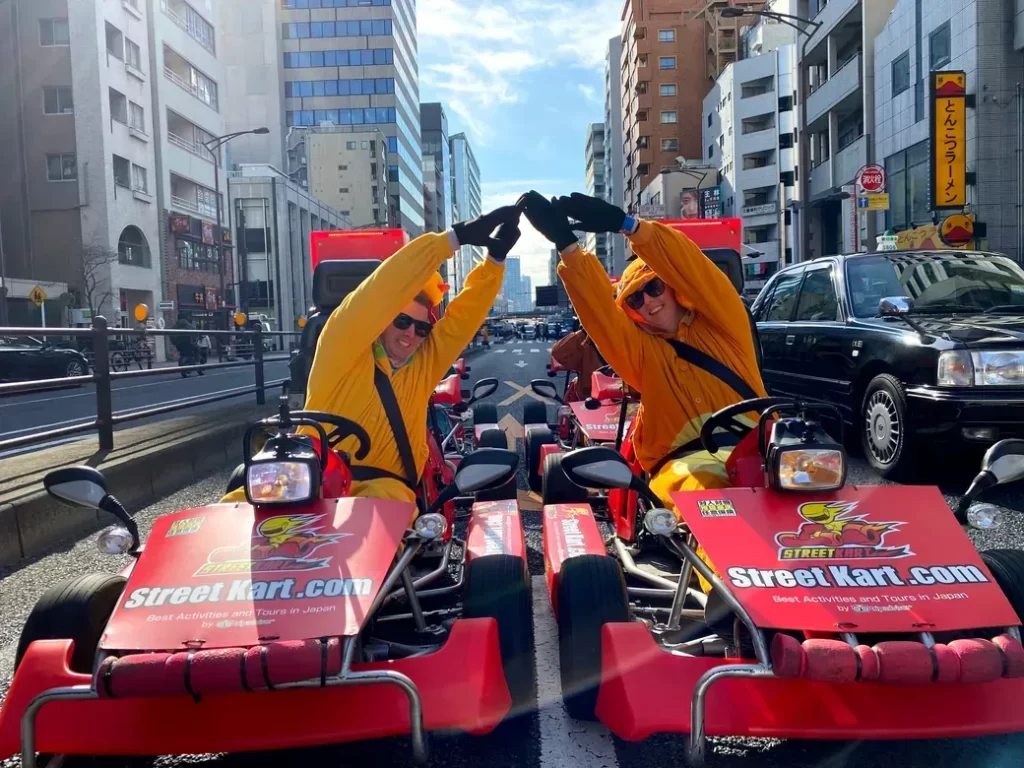
If you want to experience Tokyo from a different angle beyond walking the streets, adding a Street Kart experience to your itinerary is a great option. Street Kart offers go-kart experiences on public roads within Japan, and the official site lists multiple stores in Tokyo, along with locations in Osaka and Okinawa. For the Tokyo area, you can find store information for Shinagawa, Akihabara, Shibuya, Shibuya Annex, Tokyo Bay, Asakusa, and more. Details are available on the official website.
What makes the Street Kart experience special is how it lets you grasp the city’s scale and flow of the streets in a way that’s completely different from typical walking tours or sightseeing through a car window. The view differs dramatically between the city center and the bay area, so you can really feel how each part of Tokyo has its own distinct character. Within your overall itinerary, it’s easier to plan when you treat it as a standalone sightseeing experience rather than just a mode of transportation.
The official site offers guided tour-style experiences, and you can check course information through the booking pages or individual store pages. Since the duration and routes vary depending on the store and traffic conditions, it’s practical to review the relevant store information before booking if you have a specific area in mind. For example, the Tokyo Bay store page notes that duration may vary based on traffic conditions.
The official site also has costume information available. Since this can lead to photos that look different from regular sightseeing shots, it’s worth considering if you want to add variety to your travel memories. That said, since whether you can participate and what to prepare depends on individual circumstances, make sure to confirm the conditions before booking.
Driver’s License Requirements You Need to Check Before Participating
The most crucial thing to confirm when considering a Street Kart experience is the documentation needed to drive. The driver’s license information page on the Street Kart official site clearly outlines the licenses and permits required to drive legally in Japan. According to the guidance, you’ll need either a Japanese driver’s license, an International Driving Permit based on the 1949 Geneva Convention, a license from your home country with a Japanese translation (for certain countries/regions), or SOFA-related documents—the conditions vary. Make sure to check the driver’s license information page for full details.
The official site explains that what matters isn’t your nationality itself, but which license or permit you actually hold. There’s also a note that Japan has strict rules around International Driving Permits, and documents that are valid in other countries aren’t necessarily recognized in Japan as-is. Don’t make snap judgments about your driver’s license right before traveling—use the official information to prepare properly.
A general tip: confirm you can bring the original required documents on the day. Copies or incomplete documents may prevent you from participating, so it’s worth double-checking even after your booking is confirmed, right before you head out. If you’re visiting from overseas, starting your preparations early makes it easier to plan your whole itinerary.
How to Plan Your Day and What to Wear
On days that include a Street Kart experience, it’s easier to manage your schedule if you don’t overpack the surrounding plans. Some store pages on the official site note that you should arrive at the store at least 30 minutes before your booking time. When visiting an unfamiliar area, factor in travel time from the station to the store, and give yourself plenty of buffer.
Clothing requires a slightly different mindset than regular city walking. Some pages on the official site note that you should avoid heels, sandals, and long skirts—so building your outfit around easy-to-move-in pants and walking-friendly shoes makes things easier. Luggage tends to pile up during travel, but with the experience and the logistics around it, keeping your belongings organized as much as possible helps reduce stress.
Weather and traffic can also affect how the day plays out. For your overall sightseeing plan, having flexible “drop in if there’s time” options before and after the Street Kart experience makes time adjustments much easier.
A Sample One-Day Tokyo Itinerary for Students and 20-Somethings
How you spend your time in Tokyo varies depending on group size and goals, but as one manageable example, you could try: city walking in the morning, moving to another area in the afternoon, and enjoying scenery or food from evening onward. For instance, walking from Harajuku to Omotesando in the morning, having lunch around Shibuya, doing a Street Kart experience in the afternoon depending on booking availability, and viewing scenery in the bay area or Shinjuku at night—this kind of structure brings nice variety to your impressions of the city.
Another approach is to stroll around Asakusa in the morning, fit in an experience or shopping in another area in the afternoon, and wrap up at a relaxed restaurant in the evening. The key is not trying to understand all of Tokyo in a single day. Since neighborhoods vary so much, deciding on a core area gives more satisfaction than trying to cram each place in briefly.
If you want to keep costs down, going light on breakfast and lunch and sticking to areas with short travel distances helps you adjust. On the flip side, if you’re prioritizing photos and experiences, dialing back on meals and shopping to free up time will keep your itinerary stable.
Practical Tips for Enjoying Tokyo at a Comfortable Pace
Tokyo is a convenient city, but the crowds and constant movement can be tiring. On student and 20-something trips, relying too much on stamina and overpacking your schedule can drag down your satisfaction in the later half. Splitting your day into morning, afternoon, and evening—and placing one “must-do” item in each—makes it easier to adjust if plans shift.
In popular areas, you might face waits for restaurants or take longer moving through stations. On days with lots of walking, your choice of shoes and bags directly affects your comfort. Rather than trying to squeeze photography, shopping, experiences, and meals all into one day, narrowing it down to two or three actually leads to a more fulfilling trip.
If you’re including a Street Kart experience in your plans, organize your booking, required documents, meeting time, target store, and preferred area in advance. The latest store info, booking pathway, and course details are all available on the Street Kart Official Site. Make sure to cross-check the license requirements on the driver’s license information page and confirm you meet the conditions before planning ahead.
Wrapping Up
Tokyo is a city where students and 20-somethings can easily rearrange their itinerary based on their own interests. By structuring your days—one for walking through trendsetting hotspots, another for relaxing in quieter neighborhoods, and another centered on scenic views—you can pack meaningful experiences even into a short stay.
Within all that, the Street Kart experience could be one of those things that completely shifts how you see Tokyo sightseeing. If you want to feel the city from an angle different from walking or train travel, it’s worth considering once you’ve confirmed the conditions. Before booking, check store and course information on the Street Kart Official Site, and make absolutely sure to verify the required driving documentation on the driver’s license information page before moving forward with your plans.
Notice Regarding Costumes
We do not rent out costumes related to Nintendo or “Mario Kart.” We only provide costumes that respect intellectual property rights.

