
Making the Most of Midday in Tokyo by Street Kart: Why the City Looks Different Between 12 PM and 3 PM
In Tokyo, the hours between 12 PM and 3 PM reveal a different face of the city than the morning commute or the evening sightseeing rush. During the daytime, it’s easier to take in the outlines of buildings and the openness of the roads, and the differences in atmosphere from one area to the next become much clearer. A street kart experience enjoyed during these hours is one of the easiest options to fit into your schedule if you want to observe Tokyo’s cityscape while on the move.
According to the official website, Street Kart operates several shops centered around Tokyo, with locations in Shinagawa, Akihabara Shop 1, Akihabara Shop 2, Shibuya, Shibuya Annex, Tokyo Bay, and Asakusa. The course content differs from shop to shop, and durations range roughly from 45 minutes to about 2 hours. Because the 12 PM to 3 PM window connects easily with travel around lunchtime or with afternoon sightseeing plans, it’s an ideal time slot for anyone who wants to work a Tokyo street kart experience smoothly into their itinerary.
Why Tokyo’s Midday Hours of 12 PM to 3 PM Suit a Street Kart Experience
Daytime Tokyo is a time when the visual information around you is easier to make sense of. With stable light levels, you can more readily take in the width of intersections, the architecture lining the roads, and the placement of signs and greenery. Elements of the city that are easy to overlook on foot because you’re too close, or that slip by too quickly from inside a car, can be received at a different sense of distance during a street kart experience. If you want to feel Tokyo as a “flow” rather than viewing it as isolated “points,” this time of day is a great match.
The noon hour brings together office workers heading out for lunch breaks, travelers moving toward restaurants in tourist areas, and shoppers coming and going in commercial districts. Because the city’s movement temporarily increases, even the same road gives a different impression than it does in the morning or evening. From the 1 PM hour into the 2 PM hour, that flow settles down a bit, and you tend to gain more breathing room in your field of view. A midday Tokyo street kart experience is distinctive in that it lets you follow these hour-by-hour changes while on the move.
Another practical advantage is how easily it connects with afternoon plans. Whether you book before lunch or join after lunch changes how you build your day, but a slot between 12 PM and 3 PM makes it easy to coordinate with museums, observation decks, shopping, or a café visit. For anyone who wants to truly experience the city without overpacking their sightseeing schedule, the midday hours are an easy choice to work with.
What Makes a Midday Tokyo Street Kart Experience Special
The appeal of a street kart experience lies in how easily you can compare the differing atmosphere of each district as you move through Tokyo’s various areas. Around Shibuya, there’s the density unique to a busy commercial area full of foot traffic. Around Asakusa, the contrast between historic scenery and modern high-rise structures becomes easy to see. Toward the bay area, the bridges, wide roads, and open sky offer a vista that differs from the city center. During the daytime, these differences are relatively easy to discern, making it a great time to recognize the character of each area.
The official website introduces a Shibuya course example: an approximately one-hour route that includes Dogenzaka, the Shibuya Scramble Crossing, Omotesando, and Harajuku. The Asakusa course example presents an approximately 45-minute to 1-hour route that passes near Kaminarimon and heads toward the Tokyo Skytree. The Tokyo Bay course example features an approximately 1.5 to 2-hour route starting from the Shinkiba shop and touring toward the Rainbow Bridge and Tokyo Tower. Every course is presented on the premise that the duration may vary depending on traffic conditions.
In a daytime experience, not only is the scenery along these routes easier to see, but the different uses of the city also become easier to sense. In Shibuya and Harajuku, for example, the density of commerce and foot traffic stands out; in Asakusa, the tourist flow and historic scenery; in the bay area, the sheer scale of infrastructure. Rather than capturing Tokyo as a single image, the daytime advantage is that it’s easier to understand the city as a collection of many different faces.
The Changes in Tokyo Visible from Noon Through the 2 PM Hour
The noon hour is a moment when the city’s level of activity rises. In office districts, demand for eating out grows; in tourist areas, the movement of people in front of restaurants increases; and around major roads, deliveries and travel overlap. During a street kart experience at this time, you can more easily see Tokyo’s “daytime operations” getting underway. Beyond the famous attractions themselves, it becomes easier to grasp how the city functions in the surrounding areas.
The 1 PM hour shifts to an atmosphere just past the peak. Foot traffic remains, but it’s no longer all hurried steps, and there are more moments where you can take in the scenery calmly. Even if photos or videos are your main goal, the midday light tends to capture the details of buildings and road surfaces well. The Tokyo you see through a street kart experience has a clarity different from sightseeing centered on night views.
The 2 PM hour is the time when things switch over to afternoon sightseeing. Lunch crowds settle down, and the flow toward cafés and commercial facilities increases. If you join at this time, it’s easy to create a route that takes you straight on to other sightseeing afterward. Rather than treating a Tokyo street kart experience as a standalone event, the midday advantage is how easily you can position it as a time to deepen your understanding of Tokyo within the flow of the day.
A Perspective for Savoring Midday Tokyo by Drawing on Local Character
To make the most of midday Tokyo, it helps to first decide which area you’ll experience it in. The Shibuya area, where redevelopment zones and existing commercial districts intermingle, is a place where you can readily feel the speed of change that is so characteristic of Tokyo. On courses that extend to the Omotesando and Harajuku areas, the difference between tree-lined avenues and densely packed entertainment districts also becomes easy to see. For those who associate Tokyo with fashion, commerce, and youth culture, the midday Shibuya area makes for an easy entry point.
The Asakusa area is one where the contrast between Tokyo’s historical resources and the modern city is especially visible. As noted in the official guidance, the flow of your view shifting from around Kaminarimon toward the Tokyo Skytree conveys how close the distance is between an old, established tourist site and a new landmark. During the daytime, the brightness of the sky makes distant views easier to see, and the impression of looking up at structures from ground level is easier to grasp as well.
The Tokyo Bay area suits those who want to feel an openness different from the city center. The Rainbow Bridge and the road scenery of the waterfront present a Tokyo unlike Shibuya or Asakusa. The official website presents this as an approximately 1.5 to 2-hour course, making it a candidate when you want to view the city for a comparatively longer stretch. Among urban sightseeing options, it’s an area worth considering for anyone interested in bridges, waterfront infrastructure, and the open feel of the sky.
Official Information to Check Before Participating
When considering a street kart experience, the basic first step is to check the Street Kart official website for information on shops, courses, reservation slots, and meeting locations. Because business hours, meeting points, and the characteristics of the guided routes differ from shop to shop, you’ll need to choose based on the sightseeing area you want. Deciding after comparing several Tokyo shops makes it easier to plan your travel.
Regarding the documents required for driving, you’ll need to check the official guidance on driver’s licenses. The official website explains the necessary documents according to your circumstances, including a Japanese driver’s license, an International Driving Permit based on the 1949 Geneva Convention, a license from an eligible country together with a Japanese translation, and SOFA-related documents. Which documents are valid is explained as being determined not by nationality, but by the type of license or permit you hold.
Each shop page also lists the flow of the day, such as guidance to arrive at least 30 minutes before your reservation time, presenting the originals of the required documents, and the guide’s driving briefing and safety instructions. Regarding attire, there’s guidance to avoid heels, sandals, and long skirts. Because this kind of information directly affects whether you can participate and how the day proceeds, it’s important to check it either before or after booking.
How to Think About Working It into Your Midday Plans
To make the most of a 12 PM to 3 PM street kart experience, it’s important not to overpack the plans before and after it. Because getting around Tokyo can take time choosing train lines or navigating inside stations, leaving some buffer before and after the meeting time helps keep your overall itinerary stable. Especially during the midday hours, waiting times at restaurants can occur, so if you’re combining it with lunch, deciding the order in advance makes coordination easier.
If you join before lunch, you can have your meal in that area afterward and enjoy the direct connection to the scenery you saw. If you join after lunch, you can use it as time to grasp the city’s overall picture before heading into afternoon sightseeing. Since your choice of area—Shibuya, Asakusa, the bay area, and so on—also makes it easier to decide where to go sightseeing next, the midday experience works equally well as the starting point or a waypoint of your day.
A Tokyo street kart experience is an activity suited to anyone who wants to compare the differences from one area to the next while moving through the city. Midday Tokyo is a time of day when those differences are relatively easy to read. With brightness, the flow of traffic, the movement of people, and each area’s uses all overlapping, it becomes easier to understand Tokyo in three dimensions. If you want to make your afternoon Tokyo sightseeing more concrete, the 12 PM to 3 PM window is an easy option to consider.
Turning Tokyo Between 12 PM and 3 PM into Experiential Value
Midday Tokyo is a time of day when the city’s functions and scenery are both easy to see at once. By choosing a street kart experience during these hours, you can do more than just look at famous spots—you can continuously sense how the city of Tokyo moves during the day. The foot traffic of Shibuya, the historic scenery of Asakusa, the openness of the bay area: each area’s characteristics are easy to grasp under the midday light, and each leaves a different impression.
If you’re thinking of participating, check the shop information and reservation availability for your desired area on the Street Kart official website, and confirm the required documents in advance on the official driver’s license page. For anyone who wants to make good use of a few midday hours in Tokyo, a street kart experience is one option for changing the way you see the city.
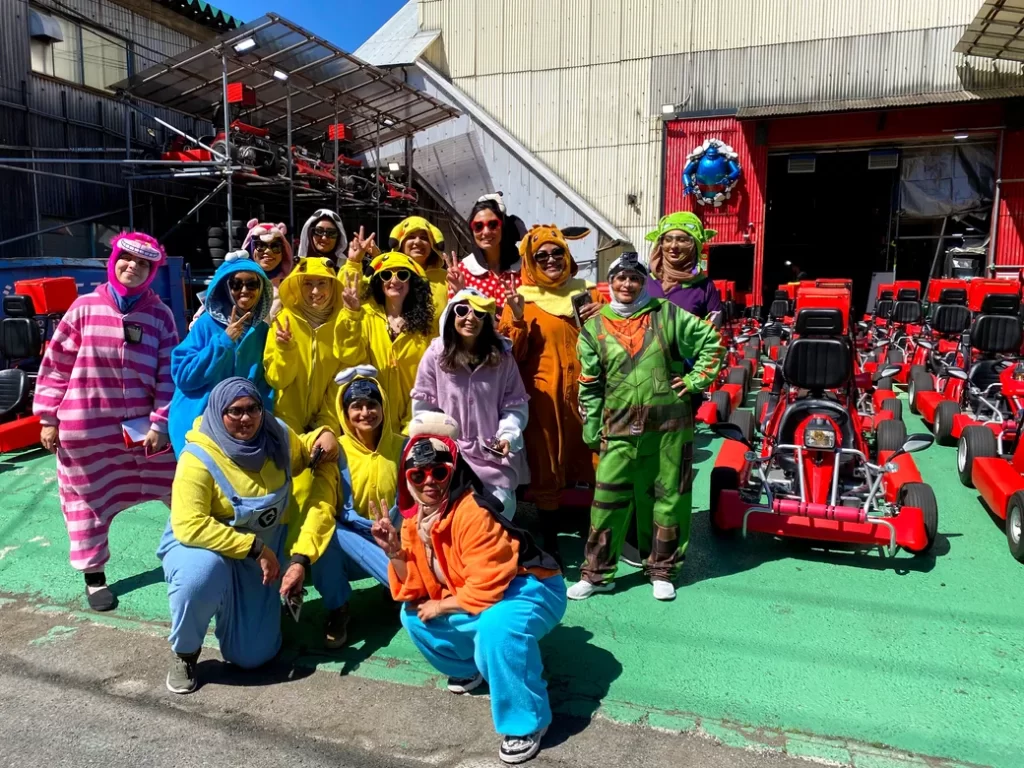
Our shop does not rent out Nintendo or “Mario Kart”-related costumes. We provide only costumes that respect intellectual property rights.
A Note About Costumes
Our shop does not rent out Nintendo or “Mario Kart”-related costumes. We provide only costumes that respect intellectual property rights.

